- Published on
ELECTRICAL & POWER INTEGRATION SPECIFICATION
- Authors

HTL-06 – ELECTRICAL & POWER INTEGRATION SPECIFICATION
- HTL-06 – ELECTRICAL & POWER INTEGRATION SPECIFICATION
- 1. Purpose
- 2. Scope
- 3. Definitions
- 4. Assumptions
- 5. System Description
- 6. Technical Specification
- 7. Constraints
- 8. Failure Handling
- 9. Interfaces
- 10. Open Issues
- 11. Revision History
1. Purpose
1.1 Document Objective
Menjadi referensi teknis integrasi elektrikal untuk:
- Node power supply
- Actuator drive
- Panel wiring
- Electrical protection
- Hardware safety interlock
- EMI mitigation
- Grounding strategy
Dokumen ini menjamin bahwa implementasi HortiLink aman secara fisik.
1.2 Authority
HTL-06 mengikat:
- Tim Electrical
- Tim Panel Builder
- Tim Firmware (terkait safe-state behavior)
- QA safety validation
Perubahan rating atau proteksi wajib review lintas tim.
1.3 Change Governance
Perubahan berikut wajib review arsitektur:
- Relay/contact rating
- Power topology
- Interlock logic
- Grounding model
- Supply voltage baseline
Jika mempengaruhi:
- HTL-02 (fail-safe)
- HTL-03 (gateway supply)
- HTL-00 (failure containment)
Maka revisi lintas dokumen wajib.
2. Scope
2.1 In-Scope
- DC supply design (12–24V → 5V/3.3V)
- Node power protection
- Relay & contactor integration
- Inrush handling
- Overcurrent protection
- Fuse/MCB selection baseline
- EMI suppression
- Grounding scheme
- Panel layout baseline
- Brownout behavior
- Surge protection
2.2 Out-of-Scope
- Utility-level grid design
- High-voltage distribution > 400VAC
- Certified safety compliance documentation (dibuat terpisah)
- Mechanical enclosure design detail
3. Definitions
3.1 Control Voltage
Tegangan rendah untuk Node (3.3V / 5V / 12–24V DC).
3.2 Actuator Power Line
Line daya utama untuk pompa, motor, valve (AC/DC).
3.3 Hardware Interlock
Proteksi fisik yang mencegah kondisi unsafe tanpa bergantung software.
3.4 Brownout
Kondisi tegangan supply turun di bawah threshold operasional MCU.
3.5 Inrush Current
Arus awal tinggi saat motor/pompa start.
3.6 Opto-Isolation
Isolasi galvanik antara MCU dan beban daya.
3.7 EMI (Electromagnetic Interference)
Gangguan elektromagnetik akibat switching beban induktif.
3.8 Fail-Safe State
Kondisi default aktuator saat:
- Node reset
- Supply hilang
- Firmware crash
4. Assumptions
4.1 Operational Assumptions
- Sistem pertanian outdoor/semi-outdoor
- Beban dominan: pompa air, valve solenoid
- Power source: 220VAC atau 110VAC
- Lingkungan lembab & berdebu mungkin terjadi
4.2 Technical Assumptions
- Node menggunakan ESP32
- Aktuator dikendalikan via relay/contact
- Tidak ada direct MCU-to-motor control
- Semua aktuator default OFF saat reset
4.3 Capacity Assumptions
Per Node:
- Maks 2–4 relay output
- Beban pompa ≤ 1HP (baseline)
- Total panel load sesuai kapasitas site
Rating final dikunci sebelum produksi massal.
5. System Description
Section ini mendefinisikan arsitektur elektrikal per Node dan integrasinya dengan panel daya site.
Tujuan utama:
- Mencegah kegagalan software menyebabkan kondisi unsafe
- Mencegah gangguan daya merusak MCU
- Memastikan isolasi kontrol & beban
- Memastikan degradasi aman saat power fault
5.1 Power Topology Overview
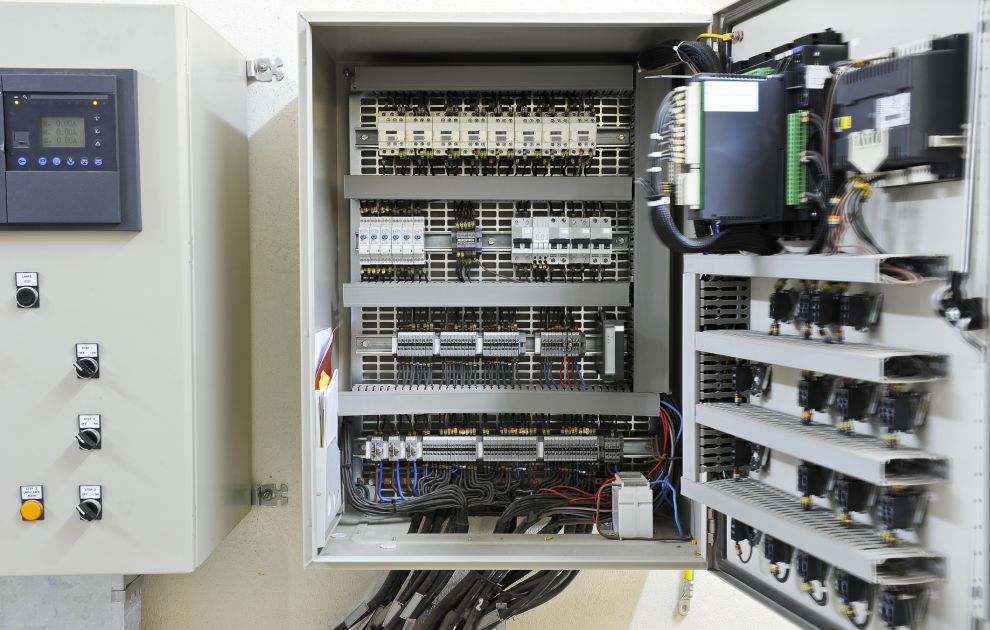
✔ Layer Daya
AC Input (110/220VAC)
- MCB utama
- Surge protection (SPD)
- EMI filter
DC Control Supply (12–24VDC)
- SMPS industrial grade
- Fuse terpisah untuk control line
Local Regulation
- 24V → 5V regulator
- 5V → 3.3V regulator
- Brownout detection aktif
Separation
- Jalur daya aktuator terpisah dari jalur MCU
✔ Prinsip Utama
- Control supply terpisah dari actuator supply
- Ground star topology
- Fuse per-segment
- Tidak ada beban induktif langsung ke MCU
5.2 Actuator Integration Model

✔ Struktur Kontrol Aktuator
MCU GPIO → Opto-isolated driver → Relay coil / Contactor coil → Actuator power line
✔ Aturan Wajib
- Opto-isolation mandatory
- Flyback diode untuk DC coil
- RC snubber untuk AC load
- Contactor untuk beban > rating relay kecil
- Relay hanya sebagai signal switching, bukan load switching besar
✔ Inrush Handling
Untuk pompa/motor:
- Gunakan contactor rating sesuai inrush
- Pertimbangkan soft-start jika daya besar
- Hindari start simultan beberapa motor
Firmware tidak boleh menjadi satu-satunya proteksi inrush.
5.3 Grounding & Noise Isolation Model

✔ Grounding Principle
- Star grounding
- Power ground dan signal ground dikontrol
- Shield cable untuk sensor analog
- Avoid ground loop
✔ EMI Mitigation
- Snubber pada relay contact
- Twisted pair untuk signal
- Decoupling capacitor dekat MCU
- Ferrite bead pada supply jika perlu
5.4 Hardware Interlock Model
Interlock fisik tidak boleh bergantung software.
Contoh:
- Level switch seri dengan coil contactor
- Thermal overload relay inline
- Pressure switch mechanical
Jika MCU crash:
→ Interlock fisik tetap bekerja.
5.5 Brownout & Power Fault Model
Saat supply drop:
- Brownout detect MCU
- Node reset
- Relay default OFF
- Actuator OFF
Tidak boleh ada kondisi latch ON setelah reset.
Power recovery:
- Delay sebelum enable control
- Hindari start bersamaan
5.6 Panel Segmentation Model
Panel dibagi menjadi:
- Power Section (AC input, MCB, contactor)
- Control Section (SMPS, Node, Gateway)
- Signal Section (sensor wiring)
Wiring duct terpisah untuk:
- High voltage
- Low voltage
- Signal analog
6. Technical Specification
6.1 Power Budget Calculation
✔ 6.1.1 Control Power Budget (Per Node)
Baseline konsumsi:
- ESP32: ~150–300 mA peak (WiFi active)
- Relay coil (per channel): 50–90 mA @5V
- Sensor analog/digital: 10–100 mA
- Margin safety: +30%
Disarankan:
- Supply 5V minimum 2A per Node assembly
- 24V supply margin ≥ 2× total estimated current
✔ 6.1.2 Gateway & Pi Budget
Gateway ESP32:
- Peak WiFi + ESP-NOW burst
Raspberry Pi:
- 5V supply minimum 3A (disarankan 5A)
Total panel control supply harus dihitung agregat.
6.2 Relay & Contactor Rating
✔ 6.2.1 Relay Control (Low Load)
Untuk beban kecil (< 5A):
- Relay minimal 250VAC rating
- Current rating ≥ 2× nominal load
- Mechanical endurance ≥ 100k cycle
✔ 6.2.2 Contactor (Motor Load)
Untuk pompa/motor:
- Rating sesuai motor HP
- Inrush rating diperhitungkan
- Coil voltage sesuai control supply (24V disarankan)
Thermal overload relay disarankan inline.
✔ 6.2.3 Switching Rule
Tidak diperbolehkan:
- Relay PCB langsung menggerakkan motor > 0.5HP
- MCU GPIO langsung ke coil tanpa driver
6.3 Fuse & Protection Baseline
✔ 6.3.1 AC Input Protection
- MCB utama sesuai total load
- Surge Protection Device (SPD) class sesuai site
- EMI filter sebelum SMPS
✔ 6.3.2 DC Control Protection
Fuse terpisah untuk:
- Node
- Gateway
- Pi
Short circuit protection wajib
✔ 6.3.3 Per-Actuator Protection
- MCB atau fuse per motor
- Thermal overload relay untuk motor
- Flyback/snubber wajib
6.4 Cable Sizing Baseline
✔ 6.4.1 Control Wiring
- Minimal 0.5–0.75 mm² untuk control line
- Shielded cable untuk sensor analog
✔ 6.4.2 Power Wiring
- Disesuaikan dengan current rating
- Voltage drop < 5%
- Outdoor rating jika diperlukan
6.5 Power Quality Requirement
✔ 6.5.1 Voltage Stability
Control supply tidak boleh:
- Drop >10% nominal
- Ripple berlebihan
SMPS industrial grade disarankan.
✔ 6.5.2 Brownout Threshold
MCU brownout threshold harus diaktifkan.
Setelah brownout:
- Relay default OFF
- No auto resume tanpa valid state
6.6 Environmental Constraints
✔ 6.6.1 Temperature
Panel harus mampu:
- 0–50°C baseline
- Ventilasi cukup
- Hindari direct sunlight
✔ 6.6.2 Humidity
- IP-rated enclosure jika outdoor
- Anti-condensation jika perlu
✔ 6.6.3 Dust & Insects
- Filter ventilation
- Sealed gland untuk kabel
6.7 Safety Interlock Requirement
✔ 6.7.1 Mandatory Hardware Interlock
Untuk pompa:
- Level switch seri dengan coil
- Thermal overload mechanical
Untuk greenhouse:
- Limit switch fisik jika ada mekanik
✔ 6.7.2 Software Tidak Boleh Jadi Satu-Satunya Proteksi
Interlock fisik tetap harus bekerja jika:
- MCU hang
- Node reset
- Firmware crash
- Gateway offline
6.8 Startup & Recovery Rule
✔ 6.8.1 Power-Up Sequence
- Stabilize supply
- MCU boot
- Relay default OFF
- Self-check
- Enable control
Tidak boleh auto-start motor tanpa explicit command atau schedule.
✔ 6.8.2 Simultaneous Start Protection
Jika banyak motor:
- Firmware stagger start
- Delay antar start
Panel harus mampu menangani peak current.
6.9 EMI & Transient Suppression
✔ 6.9.1 Snubber
- AC contact: RC snubber
- DC coil: Flyback diode
✔ 6.9.2 Decoupling
- 100nF + bulk capacitor dekat MCU
- Ferrite bead jika noise tinggi
6.10 Electrical Failure Scenarios
Minimal harus diuji:
- Power loss saat motor ON
- Brownout oscillation
- Short circuit actuator
- Relay weld contact
- Surge spike
- EMI dari motor start
- Sensor cable short
Panel harus fail-safe.
7. Constraints
7.1 Power Capacity Constraint
- Total panel load tidak boleh melebihi rating MCB utama
- Control supply harus memiliki margin ≥ 30%
- Simultaneous motor start harus diperhitungkan
Panel tidak boleh bergantung pada firmware untuk membatasi arus total.
7.2 Relay Electrical Rating Constraint
- Relay rating ≥ 2× nominal current
- Tidak boleh digunakan mendekati rating maksimum terus-menerus
- Mechanical cycle limit harus diperhitungkan
Relay PCB bukan pengganti contactor industri.
7.3 Thermal Constraint
- Temperatur internal panel harus terkontrol
- Ventilasi atau fan jika load tinggi
- SMPS tidak boleh overheat
7.4 Grounding Constraint
- Star grounding wajib
- Hindari ground loop
- Shield sensor harus di-ground satu sisi
Improper grounding dapat menyebabkan noise dan reset MCU.
7.5 EMI Constraint
- Beban induktif wajib snubber
- Motor start tidak boleh menyebabkan reset Node
- Cable high voltage dan signal harus dipisah
7.6 Power Reliability Constraint
- Brownout harus ditangani
- No uncontrolled actuator start saat power recovery
- No latch ON setelah reset
8. Failure Handling
Format: Detection → Impact → Recovery → Owner
8.1 Power Loss
Detection:
- Supply drop
- Brownout reset
Impact:
- Node reset
- Actuator OFF
Recovery:
- Controlled restart
- No auto resume
Owner:
- Electrical + Firmware
8.2 Brownout Oscillation
Detection:
- Repeated reset log
- Unstable voltage
Impact:
- Relay chatter
- Possible contact wear
Recovery:
- Investigate supply
- Add stabilization
- Increase hold-up capacity
Owner:
- Electrical
8.3 Relay Weld Contact
Detection:
- Actuator ON meski output OFF
- Current sensor anomaly (jika ada)
Impact:
- Unsafe actuator state
Recovery:
- Manual inspection
- Replace relay
- Add contact feedback in future revision
Owner:
- Maintenance
8.4 Short Circuit Actuator
Detection:
- Fuse blow
- MCB trip
Impact:
- Load offline
Recovery:
- Replace fuse
- Inspect wiring
- Verify load
Owner:
- Electrical technician
8.5 Thermal Overload
Detection:
- Overload relay trip
Impact:
- Motor OFF
Recovery:
- Cooling period
- Manual reset overload relay
- Root cause analysis
Owner:
- Operator / Electrical
8.6 EMI-Induced Reset
Detection:
- Unexpected reset
- Log restart reason
Impact:
- Telemetry interruption
- Actuator OFF
Recovery:
- Improve shielding
- Add snubber
- Improve grounding
Owner:
- Electrical + Firmware
8.7 Surge Event
Detection:
- SPD indicator
- Multiple device failure
Impact:
- Hardware damage
Recovery:
- Replace SPD
- Inspect panel
- Validate isolation
Owner:
- Electrical
9. Interfaces
9.1 Node Electrical Interface
- GPIO via opto-isolated driver
- Brownout detect
- Relay control line
- Sensor analog input
Referensi HTL-02.
9.2 Gateway Power Interface
- Dedicated 5V stable supply
- Brownout handling
- No shared heavy load line
Referensi HTL-03.
9.3 Server Power Interface
- Dedicated supply
- UPS recommended
- Surge protection
Referensi HTL-04.
9.4 Hardware Interlock Interface
Interlock harus:
- Seri dengan coil
- Tidak dapat dibypass software
- Tidak tergantung MCU state
9.5 Panel Wiring Interface
Segregasi wajib:
- High voltage
- Low voltage
- Signal analog
Cable duct terpisah.
10. Open Issues
Harus dikunci sebelum produksi massal:
- Rating maksimal motor yang didukung per Node?
- Apakah soft-starter diwajibkan untuk motor > 1HP?
- Apakah feedback current sensor diwajibkan?
- Apakah UPS wajib untuk semua site?
- IP rating enclosure baseline?
- Surge protection class final?
- Standar kabel minimum?
Tanpa keputusan ini, panel tidak boleh distandarisasi.
11. Revision History
| Version | Date | Author | Description |
|---|---|---|---|
| v0.1 | 2026-02-24 | Architect | Initial structured draft |
Catatan Penyusunan Artikel ini disusun sebagai materi edukasi dan referensi umum berdasarkan berbagai sumber pustaka, praktik lapangan, serta bantuan alat penulisan. Pembaca disarankan untuk melakukan verifikasi lanjutan dan penyesuaian sesuai dengan kondisi serta kebutuhan masing-masing sistem.